
Story Driven Games
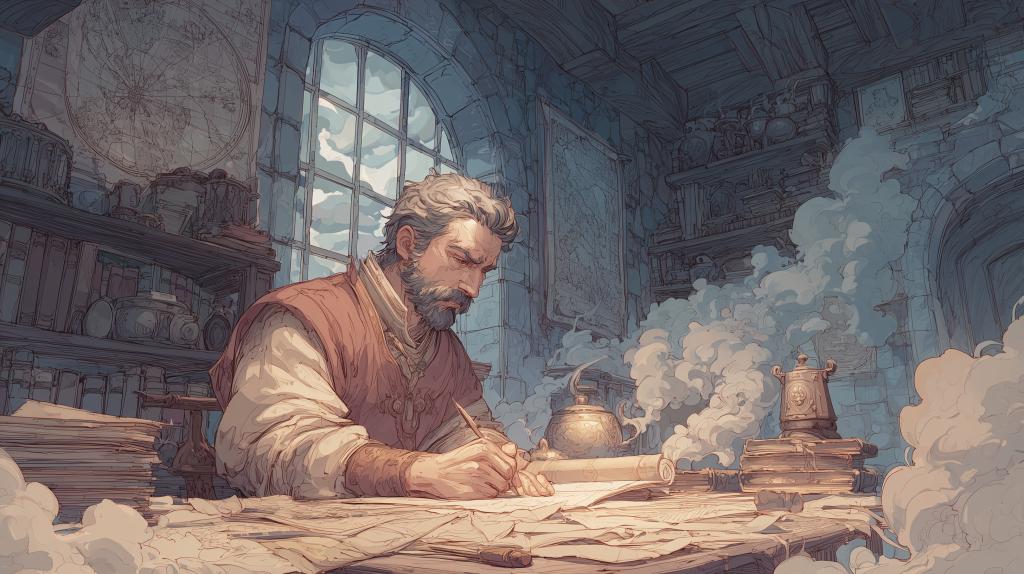
Why Narrative Comes First in Iron Realms Worlds
When people talk about online games, they often focus on graphics, loot, or endgame raids. Iron Realms games begin somewhere else. They start with story.
For more than two decades, our worlds have been built as story driven games first and systems second. They are a kind of narrative RPG that happens to be massively multiplayer, a text-based MMORPG with story at its core rather than a thin plot wrapped around a gear treadmill.
On this page you will see how that approach shapes our worlds:
- What “story driven” means in the context of online games
- How narrative has shaped Iron Realms from the beginning
- How our MUDs let players change the story, not just consume it
What Is a Story Driven Game?
Story driven games put narrative at the center of the experience. Mechanics, progression, and rewards exist to serve that narrative, not the other way around.
In a story driven narrative RPG you are not only clearing content. You are:
- Playing a character with motives and history
- Participating in ongoing events in a living setting
- Making choices that are remembered by other characters, both player and non player
Traditional single player examples are easy to name. What is rare is a story driven MMORPG, a massively multiplayer game where the world has a coherent timeline, where events are written into history, and where characters can take part in that history for years at a time.
That is the space Iron Realms games live in.
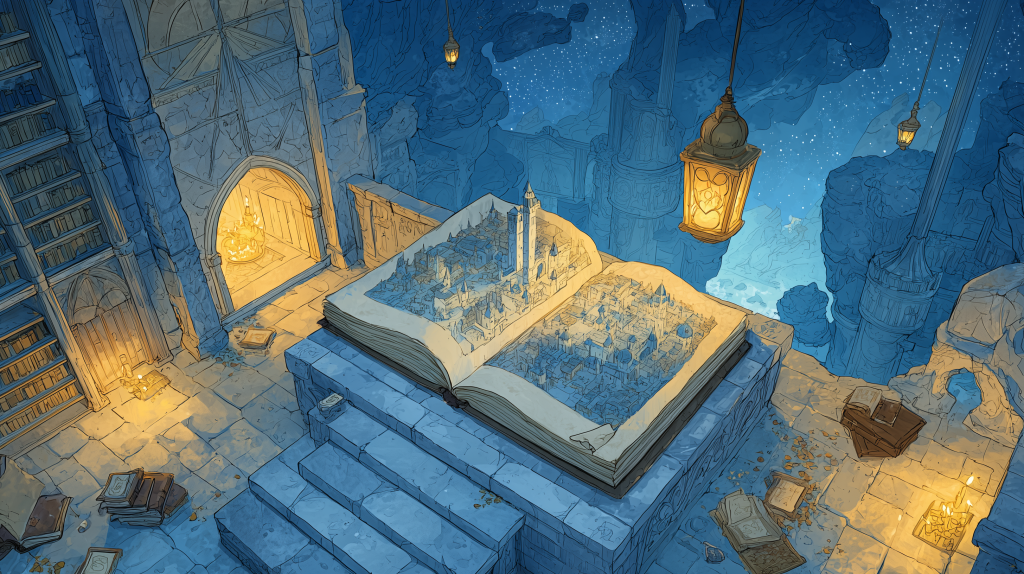
Why MUDs Have Always Been About Story
Iron Realms games are text based MUDs. Long before modern MMOs, MUD communities were already experimenting with live storytelling, political drama, and world changing events.
Text lends itself naturally to narrative.
- It is easier to build a city, a religion, or a political system in text than to model it in 3D.
- Dialogue and inner thoughts feel at home in a medium made of words.
- Staff can react in real time, adjusting events as players surprise them.
From the beginning, Iron Realms leaned into that strength. The result is a family of MMORPGs with story as the spine, not a feature tacked on late in development.
How Iron Realms Builds Story First
Although each game has its own tone and themes, they share a common narrative philosophy.
A persistent, written history
Every game maintains an internal timeline. Major events are recorded, referenced, and built upon.
- Cities rise, fall, or change allegiance.
- Divine beings gain, lose, or change their followers.
- Areas are reshaped, destroyed, or created for story reasons.
When you read a help file or lore entry in an Iron Realms game, you are looking at a record of that world’s history. Much of it happened in play, with real characters present when it unfolded.
Live events, not just scripted quests
There are quests and static content, but a great deal of story comes from live events. Producers, administrators, and volunteers run:
- In character ceremonies and political negotiations
- Festivals, religious rites, and cult activity
- Invasions, disasters, and long running plotlines that span months or years
These are not cutscenes. They are moments where players speak, decide, and act, and those actions can change how the event concludes.
Player driven politics and religion
Iron Realms games are not only stories that you read. They are stories that you help govern.
- Cities and other organisations elect or appoint leaders from the player base.
- Councils decide policy, declare wars, sign treaties, and set local laws.
- Religious orders and philosophical groups interpret the setting’s mythology in different ways.
Because these positions have real authority over membership, access, and local direction, political conflict is not just background flavour. It becomes one of the main ways the story moves forward.
Characters with long memories
In many MMOs, you complete a quest, collect your reward, and the world resets. In Iron Realms games, the world remembers.
- A speech you make in a city square can be quoted years later.
- A betrayal can follow your character through future elections or treaties.
- A heroic stand in a crisis can open doors later that would otherwise stay closed.
The games provide the tools, but it is the community that keeps records, writes histories, and passes along stories of what characters have done.
Narrative RPG vs Combat First MMO
Iron Realms worlds are not short on systems. PvP is intricate, PvE is broad, and there are many ways to optimise a build. The difference is that these systems sit inside a narrative frame.
In a typical combat first MMO, you might ask:
- What is the fastest route to level cap
- Which dungeon has the best gear
- How quickly can I reset this instance
In a story first online world, the questions look more like:
- What does my character care about, and what are they willing to do for it
- Which city or faction fits their beliefs, allies, and grudges
- How will this war or treaty matter a year from now
You still fight, craft, and progress. You simply do it in service to a story that stretches beyond your personal advancement.
Story Across the Iron Realms Games
Each Iron Realms world approaches narrative from a slightly different angle.
Achaea, Dreams of Divine Lands
Achaea is high fantasy with a strong focus on divine politics and city state rivalry.
- Gods are played as active characters who speak, scheme, and intervene.
- City states and other organisations have long running rivalries and alliances.
- Major story arcs can reshape the political map, open new areas, or retire old ones.
- A war between two cities can change trade routes, shrine locations, and even the local laws you live under.
If you want a story driven game where faith, politics, and personal ambition collide, Achaea provides that in a persistent world.
Aetolia, the Midnight Age
Aetolia leans into dark fantasy and horror.
- Undeath, corruption, and cycles of life and decay sit at the center of many plots.
- Vampiric Houses, spiritual orders, and nature focused factions all have their own agendas.
- Storylines often explore the cost of power and the tension between the living and the dead.
Players in Aetolia are not just fighting monsters. They are deciding what kind of future a haunted world will have.
Lusternia, Starmourn, and Imperian
These games now run in legacy modes, but they remain rich narrative archives.
- Lusternia offers planar fantasy, ideological conflict, and an emphasis on cosmic stories.
- Starmourn sets its narrative in a lived in science fiction universe of megacorps, alien cultures, and starships.
- Imperian preserves a snapshot of an earlier high fantasy era, with its own pantheon, wars, and political developments.
Even in legacy status, these worlds remain examples of MMORPGs with story where the written record of events matters.
What It Feels Like To Play A Story First MMO
A session in a story driven online game does not always look like a checklist of dailies.
One evening might look like this:
- You log in planning to hunt for experience in a dangerous region.
- On a city channel, you hear that rival forces are gathering outside the walls.
- A divine or NPC envoy appears in the square, announcing terms that split public opinion.
- Leaders call a meeting, ordinary citizens speak up, and a vote is held.
- You end up as part of a small delegation sent to negotiate or to spy.
None of this comes from a single quest giver with a marker over their head. It emerges from a mix of staff direction, player decisions, and the accumulated history of the world.
There are still goals and rewards, but the real satisfaction comes from being part of a story that would not have unfolded the same way without you.
Who Are Narrative MMOs For?
A story driven MMORPG is not the right fit for everyone. That is one of its strengths.
You are likely to enjoy this style of game if you:
- Read quickly and enjoy written dialogue and description
- Like thinking about your character as a person, not only a build
- Enjoy politics, diplomacy, and social problem solving
- Want your actions to have consequences that persist over time
If you prefer to skip text, rush to the next objective, and focus only on numeric optimisation, these games may feel slow at first. If you care about story that matters, they may feel rare and worth the effort.
How To Engage With Story In Iron Realms Games
You do not have to “be a roleplayer” in a formal sense to enjoy the narrative side of Iron Realms. A few habits make a large difference.
Read the local history
Each city, guild, and major organisation has its own help files, news posts, and lore scrolls.
- Start with the history of the group you join.
- Read a summary of major global events so you know what older characters refer to.
- Skim a few divine or pantheon entries to understand their domains and personalities.
Even a small amount of context will make conversations and events feel richer.
Talk in character
You do not need an accent or a detailed backstory. Simple in character speech goes a long way.
- Answer questions as your character would, not as a player at a keyboard.
- Use public channels that are meant for in character conversation.
- Allow your opinions to evolve based on what your character experiences.
Over time, other characters will remember you as part of their own stories.
Join organisations that care about story
Cities, guilds, Houses, and similar groups often have:
- Internal plots and projects
- Regular meetings or rituals
- Expectations for how members present themselves
If you seek out groups that explicitly value narrative, you will find more chances to participate in meaningful events.
Show up to events
Many of the most memorable moments in Iron Realms games are one time events.
- Festivals and celebrations
- Trials, elections, and formal debates
- Emergencies, invasions, and divine interventions
Being present, even as an observer, lets you watch the story unfold in real time and gives you opportunities to act.
Looking Ahead: Story As A Long Term Asset
For Iron Realms, story is not marketing copy. It is something that builds up over time and gives the worlds their weight.
- Every war, alliance, and divine act adds to the shared history of a world.
- New players step into settings that already feel lived in.
- Veteran players stay because their characters have roots they do not want to abandon.
That is what it means for these games to be story driven. The world remembers, and that memory grows with every year of play instead of being discarded with each expansion cycle.
If you are looking for a narrative RPG that functions as an MMORPG with story, Iron Realms games are designed for that niche. You can log in to fight, trade, explore, and scheme, but underneath it all there is a world that remembers what you have done.
Later articles will dive deeper into specific topics, such as:
- How divine characters work and how they shape narrative
- Examples of long running plotlines in each game
- Practical guides to roleplay, politics, and storytelling in a MUD
The simplest way to understand a story first MMO is to experience one. Create a character in Achaea or Aetolia, pay attention to what people talk about, and see how quickly you stop asking about graphics and start asking what happens next.